Source Medical Boot Covers for Workshops, Hospitals, and Hotels
Find 30 medical boot cover options from Chinese manufacturers. Compare materials like SMS and CPE, sizes, and certifications such as ISO 13485 and CE for industrial and medical use; compare the available evidence and request quotations based on your requirements.
Key considerations
Products List








Comprehensive Sourcing Guide
Medical Boot Cover Sourcing Guide
Procurement professionals must first distinguish between the various material compositions observed in the market, ranging from simple polypropylene to advanced SMS and CPE laminates. The observed listings indicate that medical boot covers are frequently designed with specific weight ranges, such as 25 to 65 GSM, to balance durability with comfort during extended wear in sterile environments. Buyers should verify that the selected material offers the necessary waterproof and dust-proof properties required for their specific facility protocols.
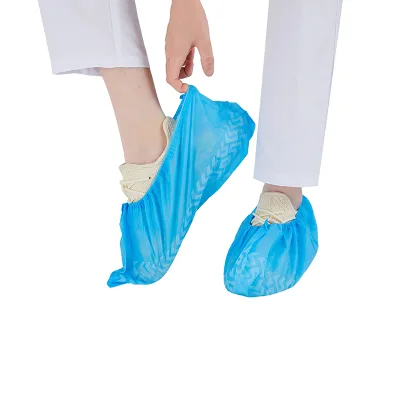
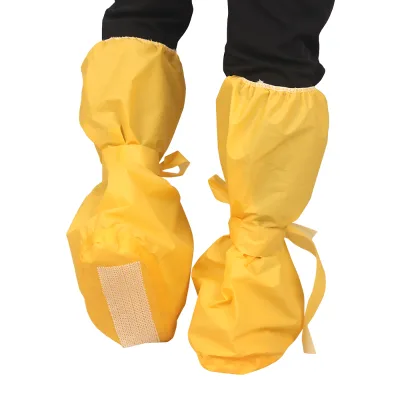
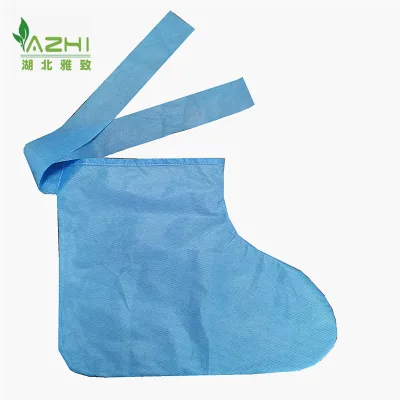
The functional design of these covers often includes elastic bands for a secure fit and slip-resistant soles to prevent workplace accidents. While some models are marketed as disposable and convenient, others emphasize flexibility and softness to ensure user compliance. It is critical to confirm that the chosen style, whether boot or slip-on, aligns with the physical demands of the intended application, such as optical-electronic workshops or general hospital corridors.
Product Scope and Observed Listing Signals
The current market data reveals a diverse range of product models, including identifiers like YD-S, RCF-010, and RC-001, each potentially serving different operational needs. Buyers should note that observed listing signals include specific dimensions such as 15x40cm or 35x40cm, alongside universal sizing options that may require careful measurement verification before bulk ordering. The variety in packing configurations, from 100 pieces per bag to 2000 pieces per carton, suggests that logistics planning must be tailored to the specific SKU selected.
Color options are not limited to a single standard, with white and blue variants frequently appearing in the supply chain to support color-coding hygiene zones. Some listings explicitly state a weight range of 30 to 45 GSM, while others suggest a broader spectrum up to 65 GSM, indicating that material density is a key differentiator. Procurement teams must ensure that the selected product matches the specific environmental requirements of the facility, as the "widely used" applications span from food industries to household settings.
Technical Specifications to Verify
Technical due diligence requires a rigorous check of the physical dimensions and material composition to ensure compatibility with existing safety protocols. Buyers must verify that the product standard, such as 37cm*50cm or 16x41cm, matches the footwear sizes of the workforce to prevent gaps that could compromise sterility. The presence of specific features like elastic bands and solid patterns should be confirmed against the actual sample to ensure the advertised "flexible" and "slip-resistant" traits are physically present.
Weight specifications are a critical indicator of material quality, with observed ranges varying from 25 GSM to 65 GSM depending on the model. It is essential to confirm that the recommended weight aligns with the intended use case, as heavier materials may offer better protection but reduced comfort. Additionally, the single package size and gross weight data provided in listings must be cross-referenced with shipping calculations to accurately estimate logistics costs and storage requirements for the facility.
Compliance and Safety Documentation
Regulatory compliance is paramount for medical-grade footwear protection, and buyers must verify that products carry recognized certifications such as ISO 13485 and CE. These certifications indicate that the manufacturing process adheres to strict quality management systems suitable for medical devices and accessories. Procurement teams should request current certificates for every batch to ensure that the supplier maintains these standards consistently over time, rather than relying on historical data.
Safety standards, including specific references like GB15979-2002, must be validated to ensure the product meets local and international hygiene requirements. The classification of the instrument as Class I and the disinfecting type as non-sterile are critical details that define the product's intended use and limitations. Buyers should confirm that the shelf life, observed as up to five years in some listings, is clearly marked on the packaging to prevent the distribution of expired protective gear.
Cost Drivers and Commercial Terms
Commercial negotiations for medical boot covers are heavily influenced by the Minimum Order Quantity, which can range significantly from 100 units to 100,000 pieces depending on the supplier. High-volume orders often unlock better pricing tiers, but the observed MOQ of 100,000 pieces for certain models requires substantial capital commitment and storage capacity. Buyers must assess their inventory turnover rates to determine if a high MOQ aligns with their consumption speed and cash flow constraints.
Pricing structures are further affected by customization requirements, such as logo printing and specific color selections, which may incur additional setup fees. The observed price range of 0 to 1 USD per unit suggests that cost is highly sensitive to material choice and order volume. Procurement teams should clarify whether the quoted price includes packaging costs, such as the 1000 pieces per carton configuration, to avoid unexpected expenses during the final invoice reconciliation.
Supplier Qualification and Quality Control
Supplier qualification should focus on verifying the origin of the product, with observed data pointing to manufacturers in Hubei, China, and other regions. Buyers must ensure that the supplier has a proven track record in producing medical accessories and can provide evidence of their production capacity to meet large-scale demands. The availability of customization services, including logo printing and specific model numbers, indicates a flexible manufacturing base capable of adapting to client needs.
Quality control processes must be validated through the supplier's quality guarantee period, which is observed as two years for some products. This long-term guarantee suggests a high level of confidence in the product's durability and material integrity. Procurement teams should establish clear protocols for inspecting incoming shipments, focusing on the consistency of the material, the integrity of the elastic bands, and the accuracy of the printed dimensions to ensure every unit meets the required specifications.
Long-Term Procurement Checks
Sustaining a reliable supply chain requires regular audits of the supplier's ability to maintain consistent product attributes over time. Buyers should monitor changes in material composition, such as shifts between SMS, PP, and PE blends, to ensure that the protective performance does not degrade. Regular sampling and testing are necessary to verify that the "waterproof" and "convenient" claims remain valid as production volumes scale up or down.
Strategic procurement also involves tracking the shelf life and stock availability to prevent supply disruptions in critical medical or industrial settings. The observation that some items have "No Stock" status highlights the need for proactive inventory management and safety stock planning. Long-term partners should be evaluated on their ability to provide accurate lead times and their responsiveness to changes in demand, ensuring a continuous flow of essential protective equipment.
FAQs
What materials are commonly used for medical boot covers?
Medical boot covers are commonly made from nonwoven PP, SMS, PE film, or CPE laminated material. PP nonwoven suits light dust control in cleanrooms, while SMS offers better particle filtration and CPE gives full waterproof protection. Many buyers choose 25GSM to 65GSM fabric, selecting heavier weights for wet environments and lighter weights for short, dry procedures.
Can medical boot covers be customized with our logo and packaging?
Yes, logo printing and custom packaging are generally available from suppliers offering this product. Logo printing is typically done according to your artwork and requirement, with box packing or bag-and-carton formats such as 100 pieces per bag and 1000 pieces per carton. Customization usually requires minimum order quantities, so confirm artwork, print method, and packing details before placing an order.
Which certifications should I check before sourcing medical boot covers?
Check that the supplier holds ISO 13485 and CE certification, which are listed for this product category and indicate a quality management system for medical accessories. These medical boot covers are classified as Class I medical materials and accessories. Also ask whether the product meets applicable hygiene standards for non-sterile disposable items in your destination market.
What sizes and weights are available for medical boot covers?
Common sizes include 15x40cm, 16x40cm, 17x41cm, 18x43cm, and formats such as 35x40cm, 40x40cm, and 37x50cm, with universal and extra-large options offered. Recommended fabric weight ranges from 25 to 42 or up to 65 GSM depending on the material. Choose the larger sizes and heavier weights for boots or slip-resistant, water-resistant use in wet workshop areas.
How are medical boot covers packed and stored after delivery?
Standard packing uses box packaging or bulk bags and cartons, for example 100 pieces per bag with 1000 pieces per carton. Some listings specify 100 pieces per bag and 2000 pieces per carton. The products are disposable and typically supplied non-sterile, with a quality guarantee period of about two years, so store them sealed in a dry area away from direct sunlight.
Can medical boot covers be used outside hospitals?
Yes, disposable nonwoven boot covers are used in hospitals, the food industry, households, hotels, and workshops for optical-electronic industries where dust and contamination control matter. Features such as soft, comfortable fabric, dust-proof and waterproof performance, and elastic band openings make them convenient for visitors and workers alike. Match the material weight and water resistance to the environment before ordering.
How do I evaluate suppliers of medical boot covers from China?
Start by confirming production origin, such as Hubei, China, then verify ISO 13485 and CE certification, Class I medical classification, and compliance with hygiene standards like GB15979-2002. Request samples to check material, GSM, elastic band fit, and water resistance. Compare customization capability, packing formats, minimum order quantities starting around 100,000 pieces, and shelf life before shortlisting suppliers.